
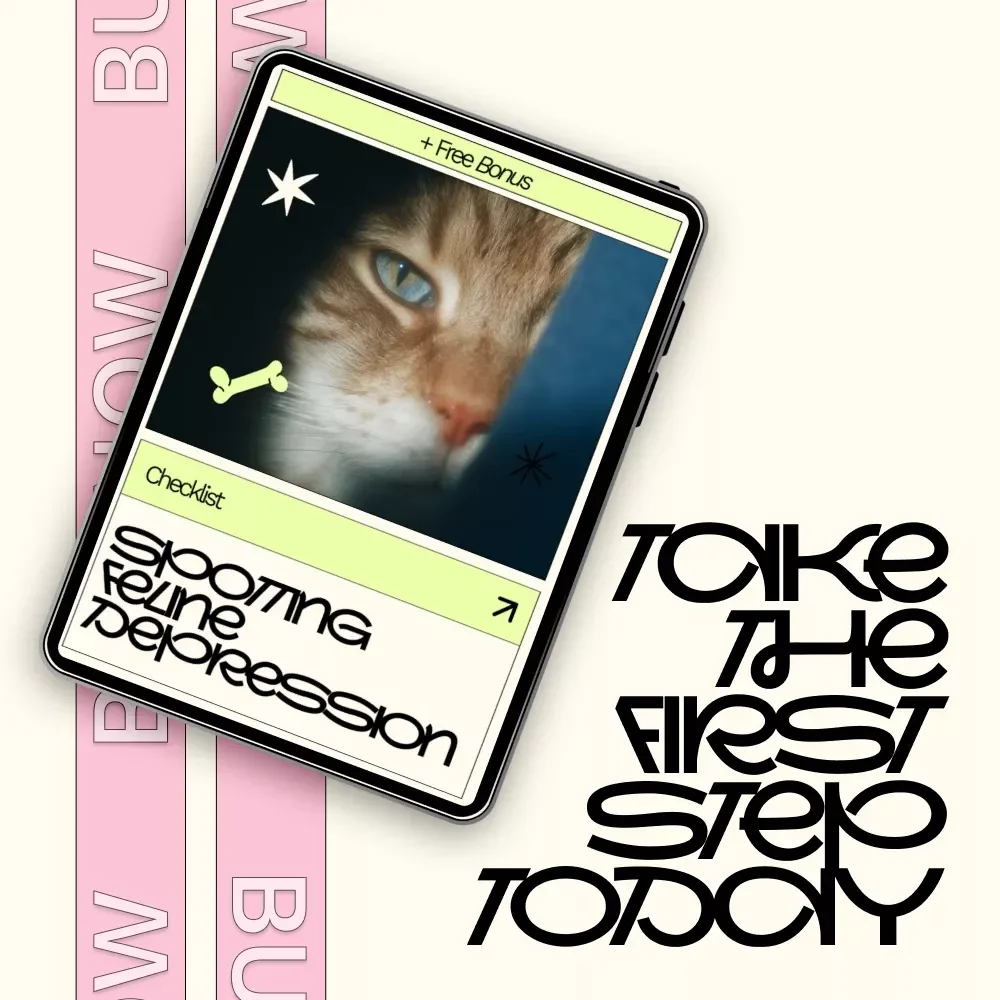
Spotting Feline Depression | Cat Behavior Guide, Emotional Health Checklist, Pet Wellness eBook for Caring Cat Owners


Understand Your Cat’s Emotional World
Cats can’t tell us when they’re feeling low—but their behavior often does. Spotting Feline Depression is a practical, easy-to-follow digital guide designed to help cat owners recognize subtle and not-so-subtle signs of emotional distress. Whether your cat has recently experienced a change in environment, routine, or health, this guide gives you clarity and confidence to understand what their behavior may be telling you. Written in a calm, supportive tone, it’s a must-have resource for anyone who wants to be more in tune with their cat’s mental and emotional wellbeing.What’s Inside This Digital Guide
- Observe Appetite Changes Note if your cat is suddenly eating significantly less or more than usual. A sharp decline or increase in meals can signal stress or low mood.
- Track Sleep Patterns Watch for unusual sleep habits—sleeping far more than normal or becoming restless at odd hours can indicate emotional distress.
- Monitor Grooming Behavior Check if your cat is over-grooming, creating bald spots, or neglecting cleaning themselves. Both extremes often reflect emotional upset.
- Assess Social Interaction Pay attention to withdrawal from family members or other pets, or conversely, clinginess that wasn’t typical before.
- Notice Activity Levels Observe if your cat is unusually lethargic, hiding more, or showing less interest in playtime, toys, or outdoor adventures.
- Detect Vocal Changes Listen for shifts in meowing, purring, or growling patterns—excessive vocalization or complete silence can signal distress.
- Spot Bathroom Irregularities Monitor litter box habits; accidents outside the box or sudden avoidance may be a sign of stress or sadness.
- Watch for Aggression or Irritability Note unexpected hissing, swatting, or growling at humans or other pets, which can indicate underlying frustration or depression.
- Check Response to Stimuli Test reactions to familiar toys, treats, or affection. A muted or indifferent response may indicate emotional withdrawal.
- Keep a Daily Mood Journal Document behaviors daily, including appetite, play, sleep, and social interactions. Patterns over time can help identify ongoing issues and guide conversations with your veterinarian.
Why This Guide Helps
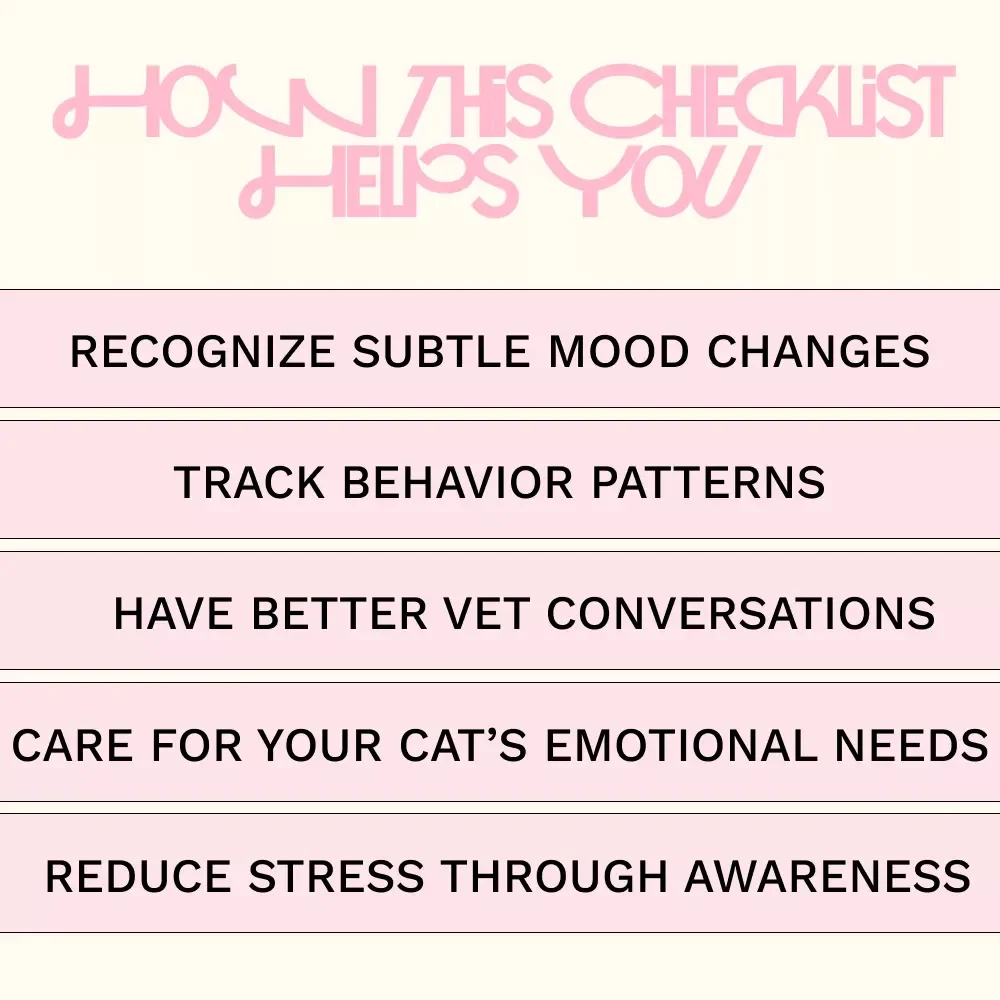
- Helps you identify emotional issues early before they escalate
- Gives you clear observations to share with your veterinarian
- Encourages proactive, compassionate pet care
- Saves time by organizing behaviors in one simple checklist
Download Today
If you want to better understand your cat and support their emotional health, this digital download is a simple yet powerful step. Download Spotting Feline Depression today and start building a deeper, more responsive bond with your feline companion.Questions, answered
Instant Delivery
Upon purchase, you get immediate access via your personal account and a confirmation email.
Returns & Refunds
Refunds are handled under the store's Refund Policy. Within 30 days, a refund may be available if the product doesn't match its description or you can't access it. Once the files have been accessed, refunds for a change of mind aren't available.
Lifetime Updates
Your purchase includes access to all future updates at no additional charge.
Instant digital access on any device, with free lifetime updates.
Refunds are handled under the store's Refund Policy. Within 30 days, a refund may be available if the product doesn't match its description or you can't access it. Once the files have been accessed, refunds for a change of mind aren't available.